
How Long Does It Actually Take to Install a New AC in Peak Summer?
When your air conditioning fails during a major heatwave, waiting for a replacement is stressful. See the realistic timeline for a full system swap to help you plan your next steps.

Facing a System Failure: What to Expect When Your AC Dies in July
Is your system completely dead, or just struggling to keep up? At Lyons AC & Heating, when a unit fails entirely, the immediate question we hear from Livingston homeowners becomes: how long does it actually take to install a new AC in peak summer? Losing your cooling during the hottest time of the year is more than just uncomfortable—it is stressful, disruptive, and sometimes unsafe. The reality of replacing a system during a major heatwave is that timelines look very different than they do during the mild off-season.
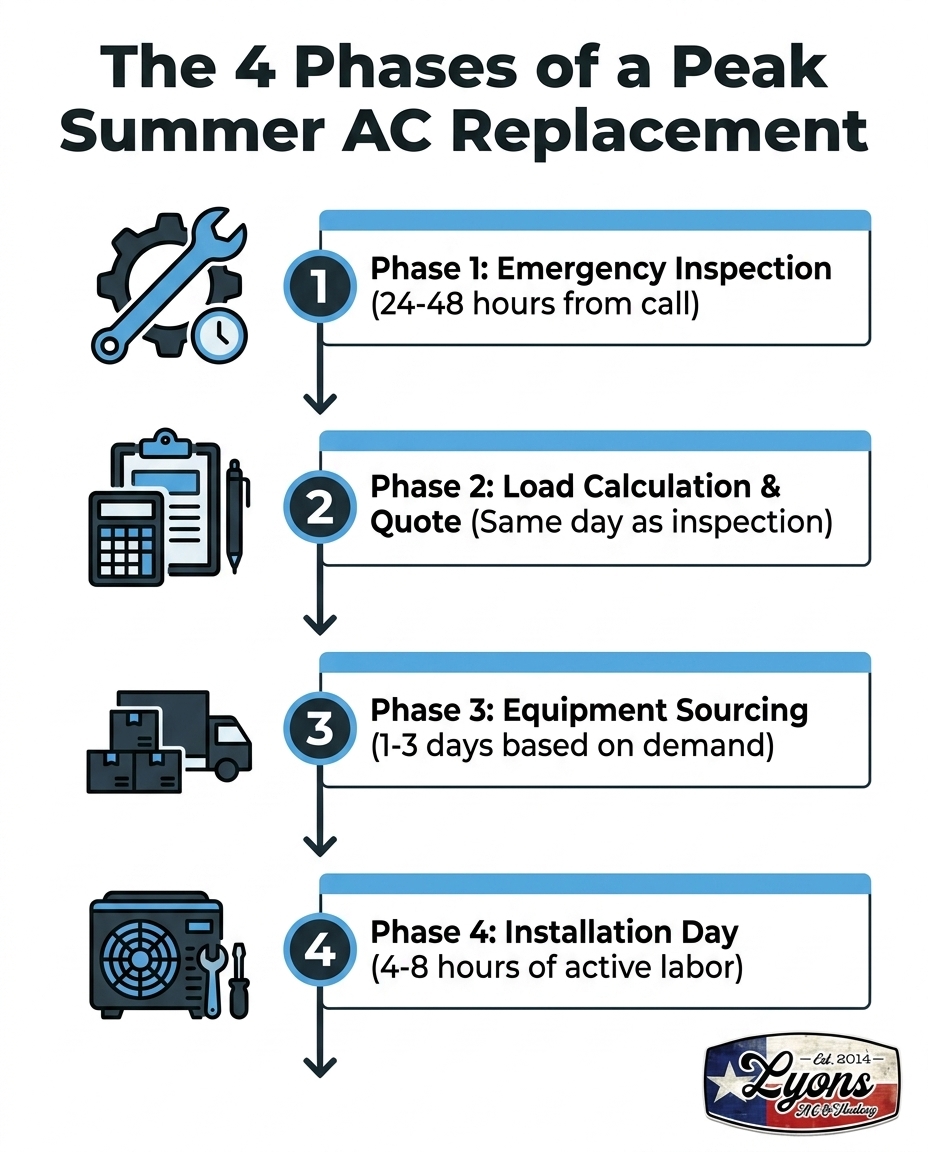
During a peak summer surge, a full replacement involves multiple distinct phases. It is not just about the physical installation of the equipment. It involves triage, diagnostics, load calculations, equipment sourcing, and finally, the installation itself. Understanding this comprehensive timeline helps you set realistic expectations and make smart decisions about interim cooling solutions while you wait. To better understand how the replacement process fits into the broader picture of your home's comfort, learning about modern HVAC systems is a great place to start.
When an air conditioner breaks down in the middle of July, the immediate instinct is to want a new unit installed the very same afternoon. While rapid response is always our goal, the logistical realities of peak-season demand mean that a full replacement usually spans several days. By breaking down the process phase by phase, you can see exactly where the time goes and why our team takes each step necessary to ensure your new system operates efficiently for years to come.
Lead Time vs. Wrench Time: Understanding the Real Schedule
To accurately gauge your waiting period, we always make sure our customers understand the critical difference between "lead time" and "wrench time." These two terms dictate the entire schedule of your replacement project. Wrench time refers to the active, hands-on labor required for our technicians to physically remove your old unit and install the new one. For a standard residential split system, wrench time typically spans 4 to 8 hours. Lead time, on the other hand, is the waiting period from your initial emergency phone call to the moment our team actually arrives at your home with the new equipment ready to install.
During the off-season, lead time and wrench time often happen back-to-back. However, during peak summer in Livingston TX, lead times naturally extend. High service call volumes, supply chain bottlenecks, and prioritized emergency dispatching all play a role in how quickly we can get to your property.
• Lead Time (Diagnostics) — Definition: Waiting for an available technician to inspect the failed unit. — Typical Peak Summer Duration: 24 to 48 hours
• Lead Time (Sourcing) — Definition: Securing the correctly sized equipment from distributors. — Typical Peak Summer Duration: 1 to 3 days
• Wrench Time (Installation) — Definition: Active labor to remove the old system and install the new one. — Typical Peak Summer Duration: 4 to 8 hours
Why Does Summer Demand Impact Wait Times?
Regional heatwaves cause simultaneous system failures across the entire community. In our experience, when temperatures spike, air conditioners that have been poorly maintained or are nearing the end of their lifespan tend to fail all at once. This creates a massive surge in emergency service calls across our service area.
Additionally, supply houses experience a much higher turnover of standard equipment sizes. If your home requires a very specific tonnage or a highly specialized unit, local warehouses might be temporarily depleted, requiring us to source the equipment from a regional distributor. Our dispatchers must also prioritize emergency calls based on safety and triage protocols, meaning homes with vulnerable residents or extreme indoor temperatures may take precedence. Transparent communication from our Lyons AC & Heating team is crucial for managing these wait times effectively.
Phase 1: The Initial Inspection and Diagnostics
The timeline for your new system officially begins with an emergency diagnostic visit. Even if you are absolutely certain the unit is dead, one of our professional technicians must confirm that the system cannot be repaired safely or economically. Common symptoms we see that prompt this urgent visit include the system blowing warm air, strange grinding noises from the compressor, or situations where the AC fan stops working completely.
During this initial visit, our technician performs a comprehensive assessment. We check the electrical connections, test the compressor's integrity, measure refrigerant levels, and inspect the condition of the existing ductwork. This step is vital because a catastrophic failure in one component (like a blown compressor) might be the result of a hidden issue elsewhere in the system (like severe airflow restriction). Fixing the symptom without identifying the root cause will only doom the replacement unit to the same fate.
Because this phase relies on technician availability during a peak summer surge, it usually occurs within 24 to 48 hours of your initial phone call. Once we confirm that a replacement is the most viable path forward, our process immediately shifts from repair diagnostics to system design and sizing.
Phase 2: System Sizing, Quotes, and Approval
Before any equipment can be ordered, our team must perform necessary administrative and technical steps. The most important of these is proper system sizing. We will never simply look at the label on your broken unit and order the exact same size. Homes change over time—insulation settles, windows are replaced, and additions are built. To ensure the new system is perfectly matched to your home's current thermal profile, our technicians perform a formal load calculation, often referred to as a Manual J.
1. Conducting the Load Calculation: Our technician measures square footage, assesses ceiling height, notes the number and quality of windows, and evaluates the home's insulation levels. This data dictates the exact cooling capacity (tonnage) your home requires.
2. Selecting the Equipment: Based on the load calculation, we present you with options. You will review different efficiency ratings (SEER2), single-stage versus variable-speed compressors, and brand options.
3. Reviewing the Quote: We provide a detailed breakdown of the costs, including labor, materials, and any necessary ductwork modifications.
4. Finalizing Approval: Once you select a system, you sign the agreement. Many homeowners use this time to review AC financing options to expedite the approval process and get the equipment ordered immediately.
Skipping the load calculation is a massive red flag in this industry. An oversized unit will short-cycle, failing to remove humidity from the air and leaving your home feeling cold and clammy. An undersized unit will run constantly, driving up energy bills and burning out prematurely. Taking the time to do this phase correctly in Livingston TX ensures your investment actually delivers the comfort you are paying for.
Phase 3: Sourcing Equipment During High Demand
Once you approve the quote, our team immediately works to source the specific condenser, air handler, and evaporator coil from local or regional distributors. This is where the realities of the HVAC supply chain during peak summer become highly relevant. While standard central air units—like a basic 3-ton, single-stage condenser—might be fully stocked at a warehouse just down the street, more specific configurations can require a short wait.
If your home requires a unique tonnage, a highly efficient variable-speed system, or if you are transitioning to a ductless mini-split AC, the equipment may need to be shipped from a larger regional hub. During a standard summer surge, this waiting period typically lasts anywhere from 1 to 3 days. We handle all the logistics behind the scenes, coordinating freight delivery and ensuring all matching components (like the correct coil and thermostat) arrive together.
If a specific central unit is severely backordered due to regional shortages, we will proactively discuss alternative cooling solutions or present comparable equipment from a different reliable manufacturer to prevent you from waiting weeks in the heat.
Phase 4: Installation Day Timeline
When the equipment is secured and installation day arrives, you can finally count down the hours until your home is cool again. The active wrench time for a standard air conditioning replacement generally takes our crews between 4 and 8 hours, though complex jobs can take longer. Knowing exactly what our team does during this day helps you plan your schedule.
1. Arrival and Site Preparation: Our crew arrives, typically early in the morning. We begin by laying down drop cloths to protect your floors, securing the work areas inside and outside, and safely recovering the old refrigerant from your dead system according to environmental regulations.
2. Removal and Placement: Our technicians safely disconnect the electrical wiring and cut the copper lines to remove the old indoor air handler and outdoor condenser. We then set the new outdoor unit on a leveled pad and maneuver the new indoor unit into the attic, closet, or basement.
3. Connections and Brazing: Our certified team reconnects the high-voltage and low-voltage electrical components. We braze (weld) the new copper refrigerant lines, ensuring a leak-free seal. If minor ductwork transitions (plenums) need to be rebuilt to fit the new air handler, our professionals fabricate and seal those connections now.
4. Testing and Commissioning: This is our most critical technical step. We connect a vacuum pump to the refrigerant lines to remove all moisture and non-condensable gases. Once the system holds a deep vacuum, we release the factory refrigerant charge, turn the system on, and measure airflow, superheat, and subcooling to verify the system is operating at peak efficiency under the heavy summer load.
How to Stay Cool While Waiting for Your New System
The hardest part of a peak summer replacement is the interim downtime. With average July highs in Livingston TX regularly reaching the mid-90s accompanied by oppressive humidity, a broken AC is not just an inconvenience—it is a genuine safety hazard. Managing the heat inside your home while you wait for installation day requires a proactive approach.
Prioritize safety above all else, especially for vulnerable family members, young children, the elderly, and pets. Indoor temperatures can quickly exceed outdoor temperatures once a house loses its ability to circulate air. Here are practical steps we recommend to our customers to manage the downtime:
• Block the sun: Close all blinds, curtains, and shades on the east and west-facing sides of your home to prevent solar heat gain.
• Minimize internal heat: Avoid using the oven, stove, or dryer. Rely on a microwave or outdoor grill for meals, and turn off heat-generating electronics when not in use.
• Circulate the air: Utilize ceiling fans to keep the remaining cool air moving. Remember that fans cool people, not rooms, so turn them off in empty spaces.
• Use temporary cooling: Purchase a temporary window unit or a portable air conditioner and install it in a single primary bedroom. Keep the door closed to create a dedicated "cool zone" for sleeping.
• Relocate if necessary: If indoor temperatures reach unsafe levels before our installation team arrives, strongly consider booking a hotel stay or staying with local family members. Heat exhaustion can set in rapidly, and your health is worth far more than the cost of a temporary room.
Frequently Asked Questions About Summer AC Replacements
How long does an AC replacement take from start to finish?
The total timeline ranges from a few days to over a week during peak summer. This comprehensive schedule includes the initial emergency inspection, quote approval, equipment sourcing, and the final 4-8 hour installation day. High demand during heatwaves directly impacts this overall duration.
Can an AC be installed in one day?
Yes, the physical installation itself typically takes one day (4 to 8 hours of active labor). However, achieving a same-day installation from the moment you make the initial phone call is exceptionally rare during peak summer due to scheduling backlogs and equipment sourcing requirements.
Why does it take longer to get an AC installed in the summer?
High temperatures cause widespread, simultaneous system failures, creating a massive surge in emergency service calls across the region. This high demand extends wait times for diagnostic visits and can temporarily deplete local equipment inventory, adding days to the sourcing phase.
How long does it take to put in a new central air unit?
Active labor for a standard central air unit replacement takes our team between 4 and 8 hours. Complex installations requiring significant ductwork modifications, difficult attic access, or custom sheet metal fabrication can extend this active labor time to a full day or more.
Do ductwork modifications add to the installation time?
Yes. If the new system requires a different plenum size or ductwork repairs to ensure proper airflow, it will add several hours to the labor time. Proper ductwork sizing is critical; forcing a new system to breathe through restrictive, undersized ducts will ruin its efficiency and lifespan.
Get Your Home Cooling Again with Reliable Scheduling
At Lyons AC & Heating, we believe that knowing the exact steps of the replacement process helps reduce the stress and uncertainty of a summer breakdown in Livingston TX. While waiting for a new system is never ideal, understanding the difference between lead time and wrench time allows you to plan your interim cooling strategy safely and effectively. Efficient, professional scheduling and reliable timelines minimize downtime during the hottest months, providing radical transparency from the initial dispatch to the final install.
When your system fails, working with a team that respects your time and communicates openly about schedules makes all the difference. If you are facing a total system failure and need a clear, honest assessment, reach out to us for a prompt diagnostic visit to get your replacement timeline started and bring reliable comfort back to your home.
Customer Testimonials
Our customers consistently praise our exceptional service and attention to detail, making us a trusted choice for all your HVAC needs.
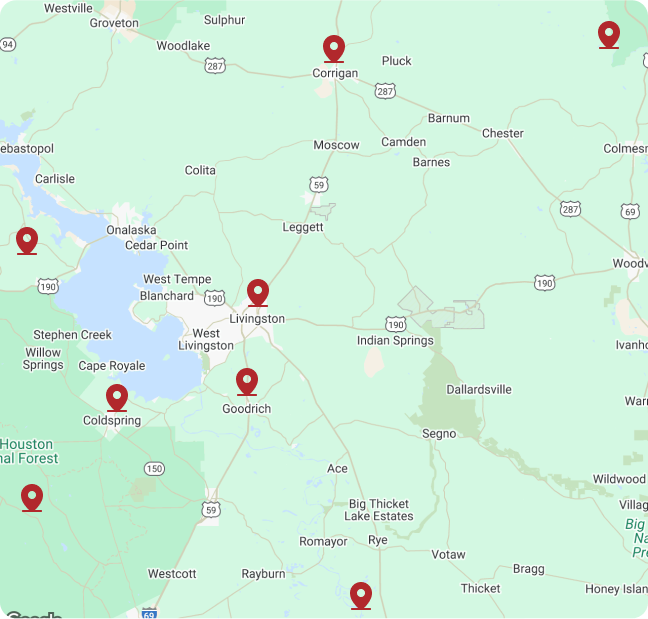
Service Areas
Our service areas cover a wide range of locations, ensuring that we can meet your needs wherever you are. We are committed to providing top-notch service in every region we operate.