
Prepping HVAC for Holiday Guests: The Science of Thermal Load and Home Comfort
Why an active kitchen and a full house cause temperature spikes. See what prepping HVAC for holiday guests actually requires to manage a massive thermal load.

The Hidden Strain on Your Home When the Relatives Arrive
Nearly 80% of sudden indoor temperature spikes during gatherings happen because an active kitchen and a house full of guests can add thousands of unexpected BTUs to a home's thermal load in just a few hours. Prepping HVAC for holiday guests is about much more than just tidying up the guest bedrooms—it requires a strategic approach to managing a massive shift in how your home heats and cools. Systems are precisely sized for your household's normal daily occupancy. When you suddenly double or triple the number of people inside, your equipment is forced to work overtime to keep up.
As the November holiday season approaches, our team at Lyons AC & Heating often hears from hosts battling a stuffy, uncomfortable house right as the main course is served. Taking proactive, preventative steps before the doorbell rings is the only way to avoid forcing your equipment to the point of failure. To keep your home comfortable, you need a reliable HVAC system supported by a routine HVAC maintenance plan.
Understanding Thermal Load: Why Your House Gets So Hot
To understand why your living room feels like a sauna during a party, you have to look at the science of thermal load. In simple terms, thermal load is the total amount of heating or cooling your equipment must produce to maintain the temperature set on your thermostat. During a typical Tuesday, your home's thermal load is relatively stable. However, during the November holiday season, that baseline gets completely disrupted by internal heat gains.
Every person, appliance, and lightbulb in your home generates heat. When you combine all of these factors, the thermostat in your hallway gets tricked into thinking the entire house is sweltering, forcing the equipment to run continuously to compensate. This sudden shift makes a clean air filter and clear airflow absolutely critical to prevent the system from overheating.
• Resting Adult — Estimated Output (BTUs per hour): 250 - 400 BTUs — Impact on Home Comfort: Increases ambient room temperature and humidity slightly.
• Active Cooking (Oven) — Estimated Output (BTUs per hour): 2,000 - 4,000+ BTUs — Impact on Home Comfort: Creates a massive localized heat spike in the kitchen area.
• Boiling Water (Stovetop) — Estimated Output (BTUs per hour): 1,500 - 2,500 BTUs — Impact on Home Comfort: Adds heavy moisture to the air, making it feel muggy.
• Incandescent Lighting — Estimated Output (BTUs per hour): 200 - 300 BTUs (per bulb) — Impact on Home Comfort: Contributes minor, steady heat to crowded rooms.
The Impact of Extra Occupants
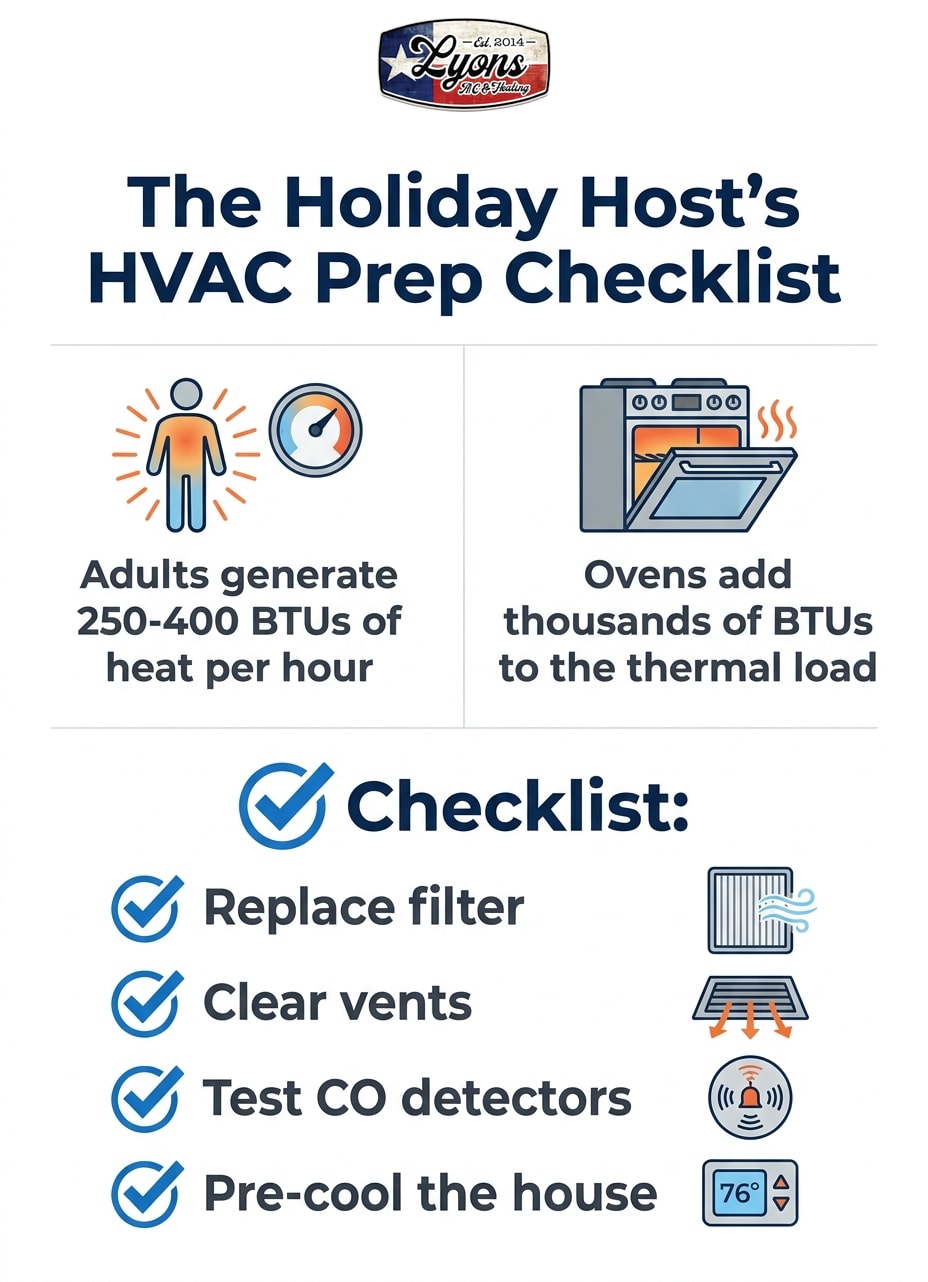
Human beings are essentially walking radiators. A single adult generates around 250 to 400 BTUs of heat per hour just by sitting on the couch and talking. If you invite fifteen guests over, you are introducing up to 6,000 extra BTUs of heat into your living space. Furthermore, crowded rooms physically restrict natural airflow. People standing in hallways, sitting in front of return grilles, or gathering in tight circles block the natural circulation of conditioned air, creating stagnant, warm pockets throughout the house.
The Kitchen Factor
Holiday cooking is the single biggest disruptor to your indoor climate. A roasting turkey, simmering side dishes, and a dishwasher running back-to-back cycles release an enormous amount of heat and humidity into the air. This creates a localized temperature spike. If your thermostat is located near the kitchen or dining room, it will read this localized heat and command your cooling system to run nonstop, which can inadvertently freeze out guests sitting in distant bedrooms while the kitchen remains hot.
Navigating Unpredictable Fall Weather Swings
Late fall weather introduces a unique balancing act for home comfort systems. You are not just dealing with the heat generated indoors; you are also fighting fluctuating outdoor temperatures. In our years of keeping homes comfortable across the area, we know that Livingston's November weather often features average highs in the upper 60s to low 70s, with lows dropping into the 40s after the sun goes down. This means your equipment has to be incredibly responsive.
During a mid-afternoon gathering, the combination of a 72-degree outdoor temperature, a hot oven, and twenty guests will likely require your system to provide active cooling. However, as the party winds down, the guests leave, the oven is turned off, and the outdoor temperature drops into the 40s, your home's thermal load plummets. Your equipment must seamlessly transition to heating to keep the remaining overnight guests comfortable.
If your system is older or struggling with poor airflow, this rapid transition can cause short-cycling, where the unit turns on and off rapidly without fully conditioning the space. Ensuring your equipment is calibrated for the November holiday season guarantees that your heating performance remains strong and steady, regardless of how wildly the weather swings outside.
Managing Indoor Air Quality with a Full House
Temperature is only half of the comfort equation; the other half is what your guests are actually breathing. When houses are closed up tightly during cooler months, a full house quickly degrades the indoor environment. Extra people bring extra dust, outdoor allergens on their coats, and pet dander into a closed space. Combined with the odors of cooking and the lack of fresh air circulation, the air can quickly become stale and heavy.
During the November holiday season, our team recommends taking several safe, proactive steps to manage these airborne pollutants before they settle into guest bedrooms:
• Run exhaust fans early: Turn on your kitchen range hood and bathroom exhaust fans before you start cooking or before guests arrive. This pulls moisture and odors out of the house before they can spread.
• Keep doors open: Unless a room needs privacy, keep interior doors open to promote cross-ventilation and allow your return vents to pull air from the entire house evenly.
• Manage humidity: Boiling pots on the stove add heavy moisture to the air. Use lids on pots where possible to keep humidity levels balanced, which helps the air feel cooler and less oppressive.
• Upgrade filtration: Using a high-quality pleated filter can capture a significant amount of airborne particles, dust, and dander before they circulate through the ductwork.
Addressing these factors proactively ensures that your indoor air quality remains high, keeping sensitive guests comfortable and preventing lingering food odors from settling into your upholstery.
The Ultimate HVAC Prep Checklist for Holiday Hosts
Before the chaos of hosting begins, there are several essential, safe DIY steps every homeowner should take. Completing this checklist ahead of the November holiday season ensures your equipment can handle the increased airflow demands without suffocating. If you want to dive deeper into seasonal readiness, reviewing an essential seasonal tune-up checklist is a great next step.
Replace Air Filters
A clean filter is your system's first line of defense. When your home is full of guests, the blower motor needs to pull in as much air as possible to distribute conditioned air effectively. A dirty, clogged filter acts like a brick wall, choking the system, increasing energy consumption, and potentially causing the internal coils to freeze. Swap out your current filter for a fresh one with an appropriate MERV rating (typically MERV 8 to 11 for residential use) a few days before your event.
Clear All Vents and Registers
Guest rooms often become storage areas for luggage, extra chairs, or temporary air mattresses. You must walk through every room in your house to ensure that supply vents (where air blows out) and return grilles (where air is pulled in) are completely unobstructed.
• Check floor registers: Ensure rugs, heavy drapes, or guest bags are not covering the grilles.
• Inspect low-wall returns: Move any temporary furniture at least two feet away from return vents to maintain proper system balance.
• Do not close vents in unused rooms: Closing vents increases static pressure inside the ductwork, which makes the blower motor work harder and can actually damage your equipment.
Test Carbon Monoxide Detectors
With gas ovens roasting for hours and gas furnaces kicking on as the evening chills, the risk of carbon monoxide exposure increases. Test every detector in your home, replace the batteries if necessary, and ensure there is a working unit located near the sleeping areas for your guests' safety.
Smart Thermostat Strategies for Entertaining
Managing the thermostat during a gathering requires a bit of strategy. Over the years, we've found that waiting until the house is already hot to adjust the temperature forces the system to play a game of catch-up it simply cannot win. Instead, use these proven thermostat strategies during the November holiday season to maintain a steady climate:
1. Pre-cool the space: About two hours before your guests are scheduled to arrive, lower your thermostat by two to three degrees below your normal comfort setting. This gives the system a head start, cooling the walls and furniture so the house can absorb the sudden influx of body heat without immediately spiking the indoor temperature.
2. Utilize the 'Fan On' setting: Most thermostats have a fan switch that toggles between "Auto" and "On." Switch it to "On" during the party. This forces the blower motor to run continuously, circulating air throughout the house even when the cooling or heating cycle isn't actively running. Continuous circulation mixes the hot air from the kitchen with the cooler air from the bedrooms, preventing extreme hot and cold spots.
3. Avoid drastic temperature swings: If the house gets too warm, do not drop the thermostat by ten degrees all at once. This does not make the system cool the air any faster; it only forces the equipment to run continuously, which can lead to short-cycling or frozen evaporator coils.
4. Lock the keypad: If your smart thermostat has a lockout feature, use it. Well-meaning guests often adjust the dial if they feel a temporary draft, which can throw off your entire comfort strategy for the rest of the evening.
When to Call a Professional Before the Rush
While changing filters and clearing vents are safe, highly effective DIY tasks, internal system checks always require a licensed professional. Establishing the limits of your own maintenance is vital to preventing a major breakdown. If you notice any warning signs leading up to the November holiday season, it is time to call in an expert.
Strange grinding or squealing noises, weak airflow coming from the registers, or lingering dusty odors when the system turns on are all indicators that your equipment is struggling. Ignoring these symptoms usually results in the system failing exactly when it is under the most stress—right in the middle of your family dinner.
Booking a professional tune-up early removes this anxiety entirely. When our Lyons AC & Heating technicians perform a tune-up, we ensure that your system's electrical connections are tightened, moving parts are lubricated, and refrigerant levels are exact. This level of professional oversight guarantees reliable comfort, ensuring that your family gatherings aren't ruined by unexpected system failures.
Frequently Asked Questions About Holiday HVAC Readiness
How do I adjust my thermostat for a party?
The best strategy is to lower your thermostat by two to three degrees a few hours before the party begins. This pre-cools the home and gives the system a head start against the sudden influx of body heat. Additionally, turning your fan setting from "Auto" to "On" will keep air circulating constantly, preventing the kitchen from overheating while the rest of the house freezes.
Why is my house so hot when I have guests?
Your house gets hot because every adult generates up to 400 BTUs of heat per hour, drastically increasing the thermal load. When you combine the body heat of a dozen guests with the massive heat output of a running oven and stovetop, the indoor temperature naturally spikes. Systems sized for normal daily occupancy simply have to work harder to remove this excess heat.
How do you prepare your house for holiday guests?
Preparing for the November holiday season means focusing on airflow and safety. Start by replacing your air filter to ensure the system can breathe easily under heavy demand. Next, walk through every guest room to ensure luggage and air mattresses aren't blocking supply or return vents, and test all carbon monoxide detectors.
Does cooking really affect my HVAC system's performance that much?
Yes, cooking has a massive impact on your indoor climate. A roasting oven and boiling pots can add thousands of BTUs of heat and heavy humidity to the air in a short period. This localized heat tricks the nearby thermostat into thinking the whole house is hot, forcing the system to run longer cycles to compensate.
How far in advance should I schedule pre-holiday system maintenance?
You should aim to schedule professional maintenance at least three to four weeks before your major gatherings. This provides ample time for a technician to thoroughly inspect the system, clean internal components, and order any necessary replacement parts without the stress of an impending deadline.
Secure Your Peace of Mind Before the Festivities Begin
A comfortable, well-ventilated home is the foundation of any great gathering. Understanding how thermal load impacts your equipment during the November holiday season allows you to make smart, proactive adjustments. By completing your basic DIY checks—like swapping out that dirty filter and clearing blocked vents—and seeking professional guidance for any lingering performance issues, you guarantee peace of mind. When you know your system is fully optimized, you can stop worrying about the thermostat and focus entirely on enjoying the time with your family and friends.

Customer Testimonials
Our customers consistently praise our exceptional service and attention to detail, making us a trusted choice for all your HVAC needs.
Service Areas
Our service areas cover a wide range of locations, ensuring that we can meet your needs wherever you are. We are committed to providing top-notch service in every region we operate.