
Discover Ideal Furnace Options for Your Home
Find the perfect furnace options for your home. Compare various furnace types, including gas and electric, to enhance comfort and efficiency today!

Your furnace is the heart of home comfort — it keeps you warm, affects your energy bills, and determines how long your system lasts. This guide walks through how common furnace types work, how to size a unit correctly with BTUs and Manual J, and what AFUE ratings mean for real savings in Livingston, TX. We’ll cover the trade-offs between gas, electric, and heat-pump options, the main drivers of installation and operating costs, and how smart controls and zoning can improve comfort and efficiency. You’ll also get checklists, comparison tables, and clear steps to get accurate estimates and reliable service from local pros like Lyons AC & Heating.
What Are the Main Types of Furnaces and How Do They Compare?
Furnaces heat your home by creating warm air and pushing it through ductwork. The three main choices are gas furnaces, electric furnaces, and air-source heat pumps. Each uses a different energy source and has distinct efficiency, installation, and cost profiles. Your best option depends on fuel availability, up-front budget, expected operating costs, and your home’s ductwork and insulation. Use the quick comparison below to match a system to your comfort goals and local climate in Livingston, TX.
The table below summarizes fuel type, typical efficiency, and where each option works best so you can narrow choices before a deeper review.
• Gas Furnace — Fuel / Energy Source: Natural gas (combustion) — Typical AFUE / Efficiency Range: 80%–98% AFUE — Ideal Use-Case: Homes with gas service that want lower heating costs in cold months
• Electric Furnace — Fuel / Energy Source: Electricity (resistance heating) — Typical AFUE / Efficiency Range: ~100% rated heat delivery (usually higher operating cost) — Ideal Use-Case: Homes without gas lines or where electricity is competitively priced; simpler installs
• Air-Source Heat Pump — Fuel / Energy Source: Electric (refrigerant cycle) — Typical AFUE / Efficiency Range: 100%+ effective heating equivalent via COP; performs like high AFUE in mild climates — Ideal Use-Case: Mild winters or dual-fuel systems — efficient year-round heating and cooling
That quick view helps you match system characteristics to your household needs. Next, we’ll show how each system actually produces heat and what that means for operation and maintenance.
How Do Gas, Electric, and Heat Pump Furnaces Work?
Gas furnaces burn natural gas in a burner to warm a heat exchanger; the blower then pushes the warmed air through your ducts while combustion gases are safely vented outside. Electric furnaces use resistance coils that heat up as electricity passes through them, with no combustion or venting required. Heat pumps move heat from outside to inside using a refrigerant cycle and a compressor — basically an air conditioner working in reverse — which can be far more efficient in mild weather. Knowing how each system works helps you understand maintenance needs, safety checks, and how fuel choice affects long-term costs.
With that baseline, you can weigh practical pros and cons for your home and comfort priorities.
What Are the Pros and Cons of Each Furnace Type?
Every option has trade-offs across efficiency, installation complexity, and operating cost. Gas furnaces usually offer lower fuel costs during cold spells and are available in high-AFUE models, but they require venting, a gas line, and safety inspections. Electric furnaces avoid combustion and are typically cheaper to install, but electric resistance heat often costs more to operate unless rates are low. Heat pumps provide efficient heating and cooling in mild climates, though they may need backup heat in extreme cold.
• Gas Furnace Pros: Lower per‑BTU fuel cost in many areas; high capacity and quick recovery.
• Gas Furnace Cons: Needs gas line and venting; requires combustion safety checks.
• Electric Furnace Pros: Simple install, no combustion or venting; compact fit for retrofit situations.
• Electric Furnace Cons: Can be more expensive to operate per heating BTU where electricity rates are high.
• Heat Pump Pros: Excellent seasonal efficiency; doubles as cooling; lower emissions with clean electricity.
• Heat Pump Cons: Less effective in very cold temperatures; may need supplemental heat.
Use these points to match a system to your home’s layout, fuel access, and how you use heating. The next section covers correct sizing so your system runs efficiently without short-cycling.
How Do I Determine the Right Furnace Size for My Home?
Sizing your furnace means matching its heat output (BTU per hour) to your home’s actual heat loss so it keeps rooms comfortable without turning on and off too often. Proper sizing accounts for square footage, insulation levels, window area, ceiling height, building orientation, and local climate. An oversized unit short-cycles, which hurts comfort and shortens equipment life; an undersized unit won’t keep up. The industry standard for accurate sizing is a Manual J load calculation — a measured approach that gives the BTU number you should plan around.
Choosing by calculation rather than guesswork avoids common problems and points you to the right capacity, ductwork sizing, and control strategy for steady comfort.
What Is BTU and Why Is Proper Furnace Sizing Important?
A BTU (British Thermal Unit) is the amount of heat needed to raise one pound of water by one degree Fahrenheit. Furnace output is rated in BTU/hr and tells you how much heat a unit can deliver. Picking the wrong BTU size causes issues: oversized systems short‑cycle and struggle with humidity, while undersized systems run constantly and can wear out faster. Signs of poor sizing include frequent on/off cycles, uneven temperatures, and high bills despite long run times. Correct BTU sizing improves comfort, stabilizes humidity, and helps the system last longer by running as intended.
Understanding BTUs shows why a measured approach — like Manual J — is worth the extra step.
How Is a Manual J Load Calculation Performed?
A Manual J calculation gathers detailed home data — conditioned square footage, ceiling heights, wall and attic insulation, window types and orientation, air infiltration, and local design temperatures — and converts that into room‑by‑room and whole‑house heat loss values. Technicians also check duct losses and internal heat gains, then use the Manual J method to produce the BTU/hr requirement for proper equipment selection. This data-driven process eliminates guesswork, guides duct and zoning decisions, and gives installers the numbers they need to size equipment correctly. For homeowners who want accuracy, a professional Manual J is the best protection against mis-sized replacements.
Research consistently shows the practical benefits of accurate sizing and how oversizing can increase energy use and reduce system performance.
Manual J Sizing Impact on Home Energy Use
A study of 368 recently built Florida homes compared installed system capacities with Manual J load calculations from audit data. More than half of the homes had cooling systems over 120% of the calculated Manual J value, and 31% of the 78 heat pump homes had heating capacity above 120% of Manual J. Submetered data showed a clear rise in peak energy use for systems oversized above 120% of Manual J. The study demonstrates how equipment capacity affects energy use and runtime.
The effect of residential equipment capacity on energy use, demand, and run-time, 1997
A proper Manual J leads to equipment recommendations and an installation plan that match your house — what professional installers provide during estimates and planning.
What Do Furnace Efficiency Ratings Mean and How Do They Affect Energy Savings?
Efficiency ratings show how well a furnace turns fuel into usable heat. For combustion furnaces the main metric is AFUE (Annual Fuel Utilization Efficiency), a seasonal percentage of fuel converted to heat. A 95% AFUE furnace turns 95% of fuel energy into heat and loses 5% to exhaust and standby losses. Comparing AFUE helps you see beyond marketing claims and estimate real savings when replacing older equipment. The table below gives typical AFUE ranges and how they usually affect annual fuel use.
Looking at efficiency over the equipment’s lifetime is essential — lifecycle studies show how efficiency choices affect long-term cost-effectiveness.
Furnace Efficiency Standards & Lifetime Costs
Energy-efficiency standards for residential furnaces and boilers are designed to balance installation cost and operating cost over the equipment’s lifetime. Proper life-cycle cost analysis compares installation and operating expenses to judge cost-effectiveness for a given level of service.
Life-cycle cost analysis of energy efficiency design options for residential furnaces and boilers, 2006
• Older Gas Furnace — AFUE Range: 60%–78% AFUE — Estimated Annual Fuel Use Impact: Higher fuel use; replacing can save roughly 20–40% annually
• Mid-Range Gas — AFUE Range: 80%–90% AFUE — Estimated Annual Fuel Use Impact: Moderate efficiency with reasonable upfront cost and measurable savings
• High-Efficiency Gas — AFUE Range: 95%–98% AFUE — Estimated Annual Fuel Use Impact: Very low fuel waste; best for long-term operating cost reduction
• Electric Resistance — AFUE Range: N/A (nearly 100% direct heat) — Estimated Annual Fuel Use Impact: Higher utility bills versus gas in many areas; efficiency vs. cost trade-off
This AFUE comparison shows how upgrading can lower fuel use and emissions over time. Lyons AC & Heating can help you compare models and estimate likely savings so you can decide if an efficiency upgrade makes sense for your home.
What Is AFUE and What Is a Good Efficiency Rating?
AFUE (Annual Fuel Utilization Efficiency) measures the percentage of fuel energy turned into heat over a typical season, including cycling and standby losses. Today, a practical benchmark is 90% AFUE or higher; many modern high-efficiency furnaces reach 95%–98% AFUE. Choosing at least 90% AFUE usually gives noticeable fuel savings compared to older units. When picking a model, compare AFUE alongside local fuel prices to estimate payback time instead of relying on AFUE alone.
Matching AFUE to your budget and expected savings is where a professional assessment can be most useful.
How Do High-Efficiency Furnaces Save Money and Reduce Emissions?
High-efficiency furnaces reduce fuel waste through better heat transfer, lower exhaust losses, and improved combustion control. For example, switching from a 78% AFUE furnace to a 95% AFUE model can cut annual fuel use by roughly 15–25%, depending on climate and usage, which lowers bills and combustion emissions. Keeping the system properly maintained, sized correctly, and paired with efficient thermostat strategies helps you realize those savings. To get precise estimates, a qualified assessment that uses local fuel rates and your usage patterns will convert AFUE into a clear payback estimate for your situation.
How Can Smart Technology Enhance Furnace Performance and Home Comfort?
Smart controls help furnaces run more efficiently and keep your home comfortable with less effort. Smart thermostats learn patterns, adjust setpoints, and use weather and occupancy data to cut run hours without sacrificing comfort. Zoning systems use dampers and sensors to send heat where it’s needed, avoiding wasted energy. Integration with home automation lets systems coordinate for efficiency, while variable‑speed blowers and modulating furnaces respond smoothly to load changes for quieter, more efficient operation. These technologies can reduce energy use, improve temperature balance, and provide maintenance alerts that keep equipment running longer.
What Are the Benefits of Smart Thermostats and Zoning Systems?
Smart thermostats and zoning deliver targeted comfort control and measurable savings by adapting to occupancy and room‑by‑room conditions. Smart thermostats allow remote control, usage reports, and adaptive scheduling that cut unnecessary heating. Zoning lets you avoid heating unused areas and keeps frequently used rooms comfortable. Together they reduce runtime, improve balance, and can lower fuel consumption when paired with correctly sized equipment.
Studies show meaningful energy savings are possible when smart thermostats and zoning are used strategically in homes.
Smart Thermostats & Zoning for Energy Savings
Research estimating energy savings from smart thermostats and zoning suggests these technologies can reduce residential energy use by adapting setpoints to occupancy and by focusing conditioning where it's needed. Studies using occupancy sensors and zone-based control show measurable efficiency gains.
The smart thermostat: using occupancy sensors to save energy in homes, J Lu, 2010
Key benefits include:
• Lower energy use through adaptive scheduling and learning features.
• Better comfort with room-by-room temperature control.
• Remote access and diagnostic alerts that make maintenance easier.
How Do Smart Furnaces Integrate with Home Automation?
Smart furnaces connect to home automation systems through Wi‑Fi thermostats, APIs, or hubs to enable remote control, scheduling, and event-based responses tied to occupancy or weather. Integration supports remote diagnostics and alerts for issues like abnormal runtime or filter changes so problems can be fixed before they become breakdowns. Follow security best practices — secure Wi‑Fi, strong passwords, and check data‑sharing policies — and confirm compatibility between your furnace controls, blower, and any zoning hardware to ensure full functionality.
Well-integrated smart features cut service trips and improve system uptime, supporting the proactive maintenance and installation standards described below.
Why Choose Lyons AC & Heating for Your Furnace Installation and Maintenance Needs?
Lyons AC & Heating is a local HVAC company serving Livingston, TX and nearby communities. We handle furnace tune-ups, repairs, replacements, maintenance, and installations for gas and electric central systems and are a Daikin Comfort Pro partner. Working with a local specialist means equipment recommendations, sizing, and code compliance reflect regional conditions and fuel availability. We offer free estimates and handle everything from Manual J load calculations to installation and ongoing service. If you want a practical, site‑specific assessment, contact us to schedule a professional estimate and Manual J evaluation.
The sections below describe our installation process and the maintenance steps that keep systems efficient and reliable.
Frequently Asked Questions
What factors should I consider when choosing a furnace type?
Consider fuel availability, up‑front cost, long‑term operating expenses, and your home’s insulation and ductwork. Gas furnaces often cost less to run in colder climates where gas is available; electric furnaces work well where gas isn’t an option. Also look at AFUE ratings and your local climate — heat pumps can be very efficient in milder winters.
How can I improve the efficiency of my existing furnace?
Improve efficiency with regular maintenance — change filters, keep ducts clean and sealed, and ensure good airflow. A programmable or smart thermostat can reduce run time by matching heat to occupancy. Sealing duct leaks and improving insulation also helps. If you’re unsure, schedule a professional tune‑up to identify specific issues.
What is the lifespan of a typical furnace?
Furnace life varies by type and care. Gas furnaces typically last 15–30 years; electric furnaces often last 20–30 years. Regular maintenance and timely repairs extend life. If your unit is over 15 years, showing rising bills or frequent breakdowns, it may be time to evaluate replacement.
What maintenance tasks should I perform on my furnace?
Regular tasks include changing or cleaning the air filter, inspecting the heat exchanger and burners, checking thermostat calibration, and ensuring proper airflow. Clean the blower and inspect ducts for leaks. Annual professional maintenance helps spot problems early and keeps the system running efficiently.
Conclusion
Picking the right furnace improves comfort, cuts energy use, and saves money over time. By understanding system types, correct sizing, and efficiency ratings, you can make informed choices that suit your home. For personalized advice and professional installation, reach out to Lyons AC & Heating — we’ll provide a tailored assessment so your home stays warm and efficient all winter long.
Customer Testimonials
Our customers consistently praise our exceptional service and attention to detail, making us a trusted choice for all your HVAC needs.
Service Areas
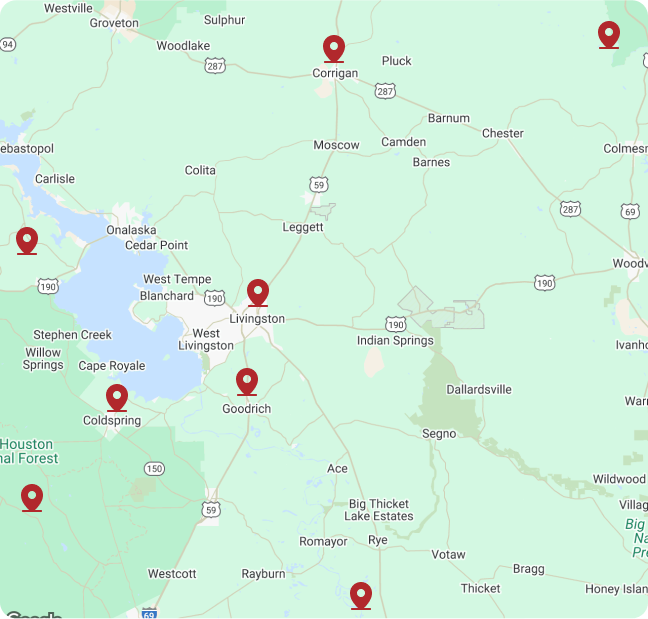
Our service areas cover a wide range of locations, ensuring that we can meet your needs wherever you are. We are committed to providing top-notch service in every region we operate.